
By Hopejane Uzor
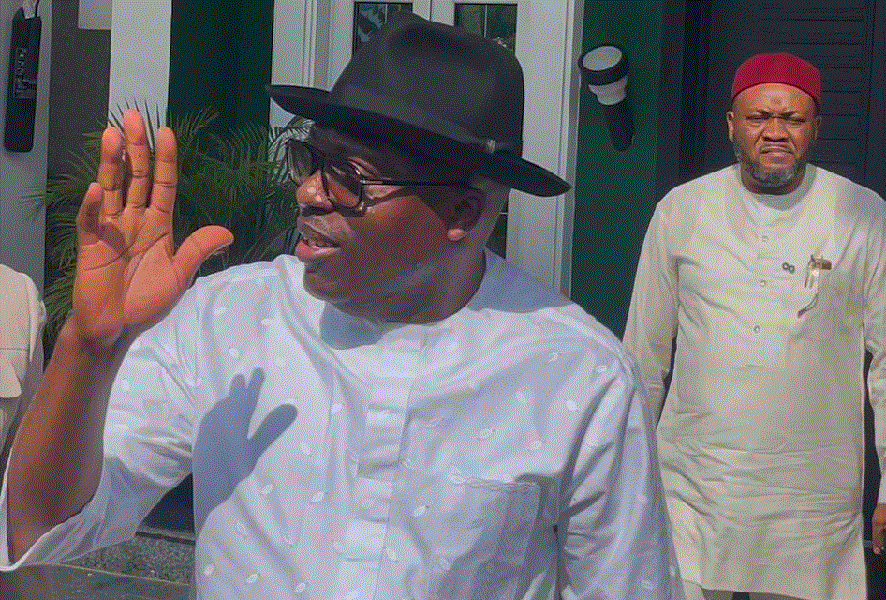
Governor Siminalayi Fubara on Sunday appeared before the screening committee of the All Progressives Congress (APC), putting to rest mounting speculation over his earlier absence from the party’s screening exercise.
The exercise, which commenced on Friday, May 8 and ended Saturday, May 9, 2026, was held at the Plateau State Governors’ Lodge and attracted party leaders, stakeholders and political figures from across the country.
Fubara’s failure to appear during the scheduled days of the exercise had sparked intense political discussions, with many observers linking the development to the unfolding political dynamics in Rivers State and ongoing alignments ahead of the 2027 elections.
However, the Rivers governor arrived at the venue on Sunday amid tight security and was ushered into a closed-door session with members of the screening committee.
Party sources disclosed that the governor was accompanied by loyalists and key political associates, while supporters gathered around the venue awaiting the outcome of the exercise.
Though details of the screening remained undisclosed, insiders within the party described the session as “cordial and successful,” noting that the committee engaged the governor on issues relating to party loyalty, governance and future political direction.
The governor’s appearance is being viewed by political analysts as a major signal in the ongoing recalibration of political forces within Rivers State, especially following months of tension and uncertainty surrounding alliances among leading political actors in the state.
Observers believe the move could reshape political calculations ahead of the next electoral cycle and strengthen APC’s influence in Rivers State.
Reacting to the development, some party faithful expressed relief that the governor eventually honoured the invitation, insisting that his participation would help stabilize internal party discussions and reduce speculation about divisions within the fold.
Meanwhile, officials of the APC maintained silence over the outcome of the screening as of press time, with indications that the committee’s report would be forwarded to the party leadership for further consideration.
Political watchers say the development may mark a turning point in Rivers politics as consultations and strategic alliances continue ahead of the 2027 general elections.
Scramble For Senate Presidency Intensifies As Amendment Rules, Dropped
By Hopejane Uzor
The withdrawal of the proposed amendment to the Standing Orders of the Nigerian Senate has triggered fresh political calculations within the National Assembly, reopening the contest for principal offices in the 11th Senate and setting the stage for a fierce battle over the Senate Presidency ahead of 2027.
The controversial amendment, which had reportedly sought to adjust certain procedures relating to the emergence of Senate leaders, was stepped down following growing opposition from lawmakers and political stakeholders who feared it could limit competition and favour specific interests.
Its withdrawal is now being viewed as a major turning point in the unfolding leadership permutations within the upper legislative chamber.
Political insiders say the development has emboldened several influential politicians and ranking lawmakers believed to be nursing ambitions for the Senate Presidency, including Imo State Governor Hope Uzodimma whose name has repeatedly surfaced in political consultations and strategic meetings.
Though no formal declaration has been made by Uzodimma or other potential contenders, sources close to the ruling All Progressives Congress (APC) said lobbying and alliance-building had intensified following the Senate’s decision.
The move has also reignited debates over zoning arrangements, regional balance and power-sharing within the APC as political actors from different geopolitical zones position themselves ahead of the next electoral cycle.
Some lawmakers reportedly argued that the proposed amendment could have restricted democratic competition within the Senate and undermined the independence of lawmakers in choosing their leaders.
A senator familiar with the development said the withdrawal became necessary to prevent internal cracks within the National Assembly and the ruling party.
“There was pressure from different blocs who believed the amendment was capable of creating division. The leadership decided it was better to maintain the existing rules and allow a level playing field,” the source stated.
The decision has since generated reactions across political circles, with analysts predicting an early scramble for influence among aspirants seeking to control the next leadership structure of the Senate.
Observers believe the battle for Senate President may shape broader political alignments ahead of the 2027 general elections, particularly as governors, former ministers and ranking senators continue consultations behind the scenes.
Meanwhile, opposition parties are also closely monitoring developments within the Senate, with some analysts warning that unresolved leadership rivalries within the APC could create openings for political realignments in the coming months.
Despite growing speculation, the Senate leadership has maintained silence on the specific reasons for withdrawing the amendment, while lawmakers continue closed-door meetings over the future direction of the National Assembly. Political watchers say the coming months are likely to witness increased lobbying, strategic defections and coalition-building as contenders intensify efforts to secure support for the highly coveted office of Senate President.