
By Ken Asinobi
The Niger Delta Development Commission (NDDC) has reaffirmed its commitment to transparency and trust as foundational pillars in its revamped corporate governance structure.
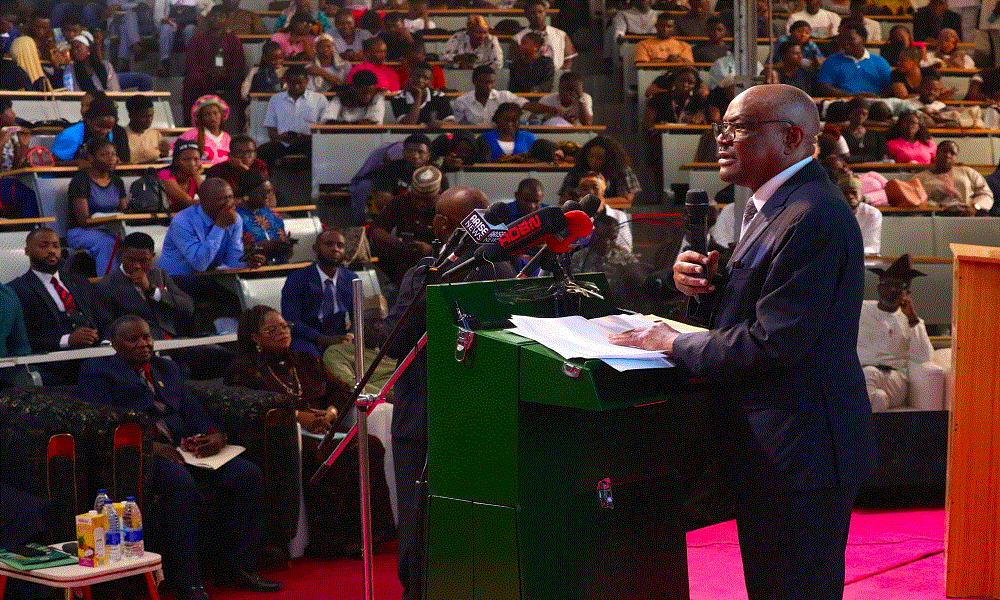
Delivering a keynote speech at the Nigerian Institute of Public Relations Week in Port Harcourt, Thursday, Managing Director of NDDC, Chief Samuel Ogbuku emphasized that these values are critical to rebuilding stakeholder confidence and ensuring accountability in the commission’s operations.
Represented by the Director of Corporate Affairs, Mrs. Seledi Thompson Wakama, she explained that NDDC has partnered with global consultancy KPMG to review and strengthen its governance processes.
“We have established processes to ensure that a new institutional culture anchored in sound ethics and good corporate governance is in place,” she said.
Mrs. Wakama explained that the commission’s workforce is now adapting to more practical and efficient ways of working, supported by clear measurable key performance indicators that track progress towards its goals.
Central to NDDC’s approach is active stakeholder engagement, fostering a collaborative relationship with government agencies, traditional rulers, civil society, youth groups, and local communities.
She described this as an “end-to-end relationship” where the commission and its stakeholders depend on each other to succeed.
The commission’s Partners for Sustainable Development forum coordinates these engagements, guiding the implementation of regional development plans.
To address socio-economic challenges such as youth unemployment, insecurity, and social violence, the NDDC has prioritized programs that reflect the voices of the Niger Delta people.
Mrs. Wakama highlighted initiatives like awarding local graduates and installing streetlights to improve community safety and commerce.
“Transparency is now our watchword in the NDDC,” she stated, underscoring how open communication and trust-building efforts are integral to the commission’s mission.
Mrs. Wakama expressed optimism about the commission’s progress and its growing partnerships with organizations like Shell and Chevron. She also affirmed NDDC’s ongoing collaboration with the Nigerian Institute of Public Relations to deepen stakeholder trust and to deliver sustainable solutions for the Niger Delta region.
Representative of Rivers State governor and Head of Service, Dr. Nengi Brown conveyed the governor’s regrets for not attending due to pressing state commitments but extended his best wishes for a successful gathering.
Emphasizing the timely theme on refocusing stakeholder engagement and organizational performance amid economic challenges, Dr. Brown highlighted the critical role of public relations professionals in rebuilding trust, promoting transparency, and ensuring accountability between government and the public.
He urged collaborative efforts among government, private sector, and communication experts to strengthen governance and foster national development.
On behalf of the governor, he congratulated the Nigerian Institute of Public Relations’ new chapter and expressed hope that the week’s discussions would generate practical insights to enhance communication and public trust in Rivers State and Nigeria.
The National President of the Nigerian Institute of Public Relations (NIPR), Dr. Ike Neliaku, delivered a speech at the NIPR Week event in Port Harcourt, highlighting Nigeria’s significant achievement in securing the hosting of the 2026 Global Public Relations Forum in Abuja—a first for the country and only the second time this event has ever been held in Africa.
He emphasized that this milestone signals a rising recognition of Nigeria’s growing influence and the understanding of public relations as a vital tool for national image building and global engagement.
Dr. Ike noted ongoing efforts to reposition the narrative around River State, especially following recent peace restoration, through the forthcoming Sam Epele lecture and other initiatives aimed at broadening Nigeria’s positive international reputation.
Dr. Ike further stressed the crucial role of stakeholder engagement, public trust, and active citizenship in effective leadership and governance.
He shared an illustrative story about the need for proper community engagement to understand genuine needs before implementing projects.
The president also highlighted the recent recognition of public relations as a professional cadre in Nigeria, calling for a shift from mere information dissemination to active, two-way communication strategies.
Additionally, he announced the launch of the Nigeria Reputation Management Group to protect and promote Nigeria’s reputation globally.
This initiative underscores a collective responsibility to focus on the country’s achievements and counter negative perceptions, with October 15 annually now designated as Nigerian Reputation Day to celebrate these efforts.
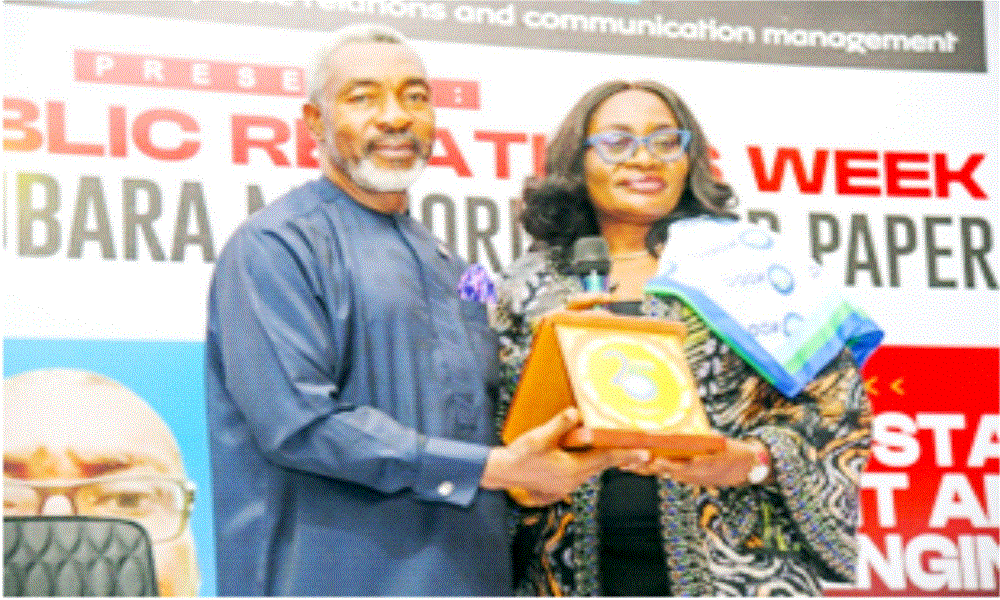
At the Alabo Olu Benibo Fubara Memorial Gold Paper Lecture session, Prof. Godwin B. Okon of the Rivers State University (RSU), highlighted the evolution of public relations in Nigeria, crediting the Nigerian Institute of Public Relations (NIPR) for its significant academic influence.
He emphasized the necessity of continual intellectual engagement within the profession, advocating for practitioners to embody public relations principles through action.
Prof. Okon also called for humility, active listening, and collaborative learning to enhance ethical competence in the face of digital transformations, framing the event as a crucial platform for connecting theory and practice.
Earlier in his welcome speech, Chairman of the Nigerian Institute of Public Relations (NIPR) in Rivers State, Rev. Francis Esuk, highlighted the state’s reputation for peace and hospitality, despite recent political tensions affecting its image and economic growth.
He expressed optimism for the future under democratic governance and emphasized the vital role of strategic communication in peacebuilding and governance.
He noted the global decline in public trust due to economic difficulties and misinformation, urging leaders to engage professional public relations practitioners for effective stakeholder management.
Esuk outlined a week of activities focused on knowledge sharing and networking to explore how public relations can transform challenges into opportunities, fostering collaboration and dialogue for societal progress.
The royal father of the day, HRM King Disrael Gbobo, honored the legacy of Alabo Olu Benibo Fubara, reflecting on his contributions to community development and peace.
In the lecture by His Royal Majesty Felix Otuwarikpo, the royal father stressed the importance of strategic resource mobilization in the Niger Delta, advocating for community empowerment over reliance on foreign aid.
He urged for partnerships between the government and local communities to address economic stagnation and promote self-sustaining development for improved living conditions.
Earlier Ezegbakagbaka of Evo Kingdom, King Prof. Leslie Nyebuchi Eke commended the leadership of NIPR in Rivers State for sustaining the institute’s presence.
He highlighted the theme of the conference, “Refocusing Stakeholders’ Engagement and Public Trust in a Challenging Economy,” as particularly timely, emphasizing the scarcity of trust in current times.
He asserted the critical role of public relations professionals as the vital link between the public and the truth, stressing that their work shapes whether society believes, doubts, or hopes.
Eze Gbakagbaka underscored that trust must be earned through transparency, empathy, and consistency rather than demanded.
He encouraged participants to foster honest communication and sincere engagement to rebuild confidence despite economic hardships. He called on all attendees to contribute with open minds and patriotic hearts towards the common goal of a more trusted and united Nigeria.