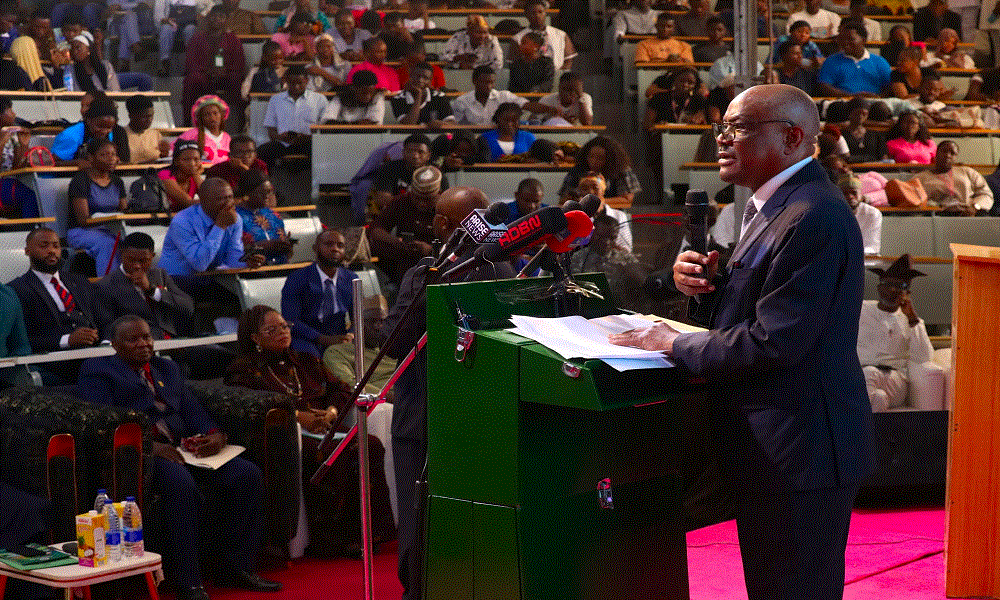

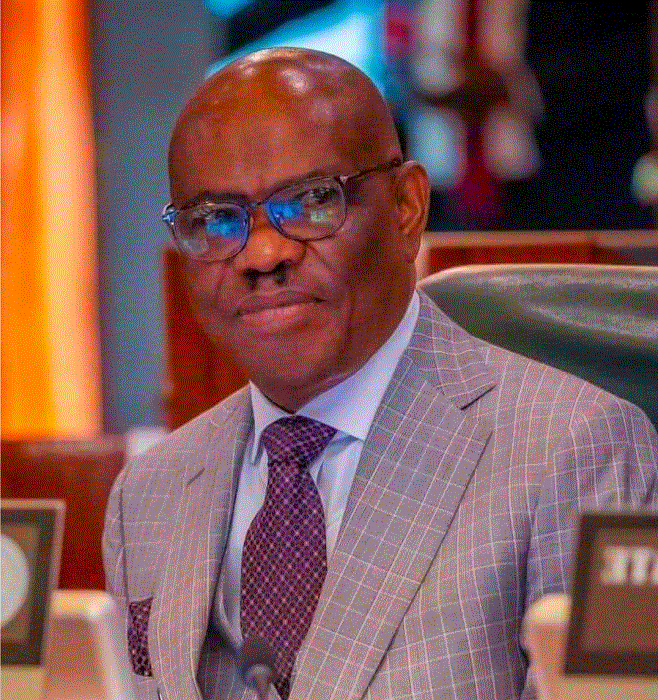
Minister of the Federal Capital Territory (FCT), His Excellency Ezenwo Nyesom Wike, has called for a fundamental reimagination of Africa’s leadership and investment framework, warning that the continent’s future depends on the courage of its leaders to act decisively and invest strategically in its people and infrastructure.
Wike made the call on Thursday while delivering the keynote address at the 2025 Innovate Africa Conference held at the ECOWAS Conference Hall in Abuja, where he was also conferred with the Innovate Africa Leadership Award 2025.
The former Rivers State Governor described the honour as a tribute to the “resilient people of Nigeria” and to President Bola Ahmed Tinubu, whom he credited for providing “the bold vision for renewal” that has redefined governance and infrastructural transformation in Abuja.
“This honour belongs not to me alone, but to the resilient people of Nigeria, and especially to President Bola Ahmed Tinubu, whose bold vision for renewal has given me the platform to contribute to our nation’s transformation,” Wike said.
He thanked Innovate Africa Corporation for recognizing leadership grounded in accountability and purpose, noting that such recognition “serves as a soothing balm in an age where leadership is often viewed through partisan lenses.”
Africa at a Crossroads
Reflecting on the state of the continent, Wike said Africa stands “at a historic crossroads,” rich in natural resources and youthful energy but weighed down by weak institutions, unemployment, and leadership failures.
“This is the paradox of our age: how can a continent so richly blessed remain so constrained? How can such abundance coexist with scarcity, such youthful energy be stifled by joblessness?” he queried.
According to him, leadership remains the decisive factor shaping Africa’s destiny. “When leadership is visionary, accountable, and courageous, even the most daunting obstacles can be transformed into opportunities,” he said. He lamented Africa’s continued dependence on the export of raw materials and importation of finished goods, describing the trend as “unhealthy and unsustainable for development.”