Atiku, Mark, Obi, Amaechi, Kwankwaso, Aregbesola, Tambuwal, Others Lead Massive ADC Protest At INEC Headquarters, Abuja

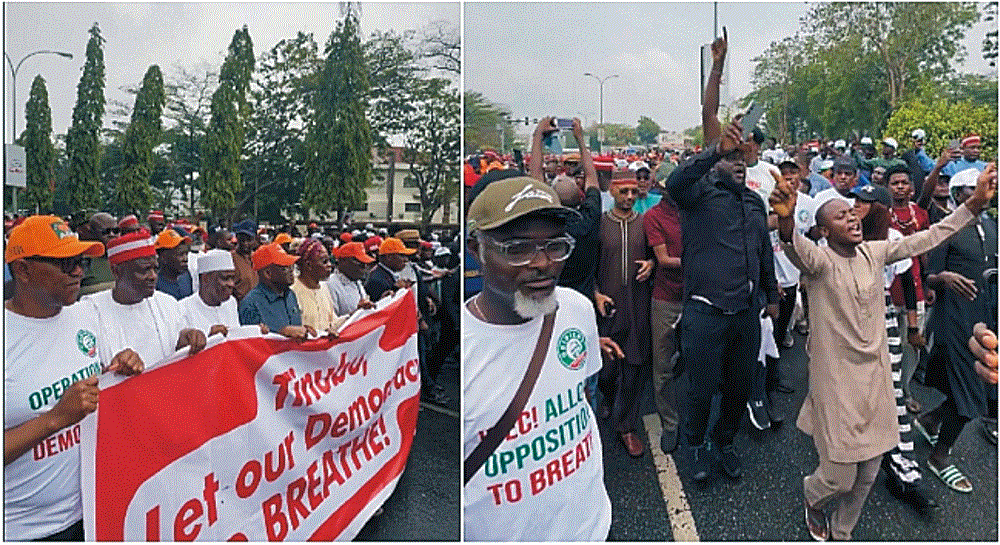
In a rare and massive show of opposition unity, prominent heavyweights of the African Democratic Congress (ADC) took to the streets of Abuja on Wednesday, April 8, 2026, leading a “Save Nigeria Democracy” protest to the headquarters of the Independent National Electoral Commission (INEC).
The march, which began at the Maitama Roundabout and snaked through the heart of the capital, featured a “who’s who” of Nigerian political leaders.
Among those on the front lines were former Vice President Atiku Abubakar, Peter Obi, and former Rivers State Governor Rotimi Amaechi.
They were joined by other ADC stalwarts, including former Kano Governor Rabiu Kwankwaso, former Senate President David Mark, former Osun Governor Rauf Aregbesola, and former Sokoto Governor Aminu Tambuwal.
The protest, bolstered by hundreds of supporters and the distinct red-capped members of the Kwankwasiyya Movement, sent a clear message to the electoral umpire.
The opposition leaders accused INEC of becoming an appendage of the ruling All Progressives Congress (APC) and working systematically to undermine the nation’s democratic foundations.
Placards held aloft by the surging crowd bore pointed messages such as “Hands off our courts” and “Judges must give justice,” reflecting deep-seated concerns over the perceived executive interference in the judicial and electoral processes.
In a viral moment from the march, Rotimi Amaechi was seen standing in an open van, addressing the cheering crowd as they approached the commission’s gates.
Documenting the event on X (formerly Twitter), Atiku Abubakar shared clips of the demonstration, framing the movement as a final stand against authoritarianism.
“Myself and other leaders of the ADC are peacefully protesting against the partisanship of the electoral umpire,”the former presidential candidate wrote.
“Our patriotic stance is aimed at safeguarding our democracy and preventing the enthronement of a dictatorship.”
The high-profile protest underscores the intensifying friction between the consolidated opposition and the electoral body as the nation moves closer to the 2027 election cycle.
The “Save Nigeria Democracy” protest, which saw an unprecedented gathering of opposition titans on the streets of Abuja, was fueled by a deepening conviction among the African Democratic Congress (ADC) leadership that a coordinated effort is underway to dismantle the party ahead of the 2027 general elections.
At the heart of this grievance is an alleged plan by the Independent National Electoral Commission (INEC) to administratively “behead” the party, effectively preventing its high-profile coalition from appearing on the ballot.
The tension reached a breaking point following INEC’s recent decision to scrub the details of the David Mark-led National Working Committee from its official portal.
While the commission cited a Court of Appeal order to maintain the “pre-litigation status quo,” the ADC leadership views this as a deliberate and selective interpretation of the law.
They argue that by refusing to recognize any functional leadership, the electoral umpire has paralyzed the party’s ability to conduct primaries or submit candidate nomination forms, creating a legal vacuum designed to persist until the 2027 deadlines have passed.
Beyond the administrative hurdles, the protesters allege a more calculated political objective: the disruption of the “Third Force” alliance.
With the recent migration of Peter Obi, Atiku Abubakar, and Rabiu Kwankwaso into the ADC, the party has transformed into a formidable challenger to the ruling All Progressives Congress (APC).
Opposition stalwarts contend that the federal government is “jittery” over this unified front and is weaponizing INEC to sponsor internal factions and “ghost litigants” to keep the party trapped in perpetual litigation.
Prominent voices within the movement, including Amaechi and media mogul Dele Momodu, have framed these hurdles as part of a broader “Abacha-style” agenda.
They believe the ultimate goal is to foster a political landscape where the incumbent faces no viable opposition, effectively engineering a “sole candidate” scenario for the next election.
Consequently, the march to INEC’s headquarters was not merely a protest against a leadership dispute; it was a preemptive strike against what the opposition calls the “administrative disqualification” of their movement. By taking their grievances to the streets, the ADC leaders are signaling to both the commission and the international community that they will not allow the 2027 electoral process to be decided in the boardrooms of the electoral umpire before a single vote is cast.