Khana Legislative Assembly Moves To Reform Customs, Hosts Public Hearing On Key Bye Law


The Khana 10th Legislative Assembly has taken a significant step toward reforming traditional practices with the convening of a one day public hearing on a proposed bye law aimed at prohibiting harmful customs and addressing related social concerns within the local government area.
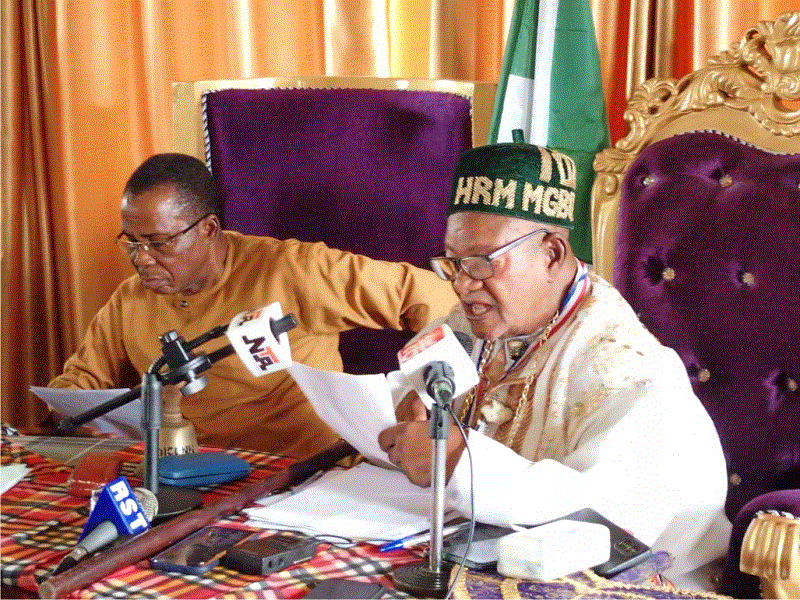
The public hearing, held at the Suanu Finimale Nwika Conference Hall in Bori, brought together a wide range of stakeholders, including traditional and paramount rulers, members of the clergy, legal practitioners from the Nigerian Bar Association, Community Development Committees CDC, youth groups, and women leaders from across Khana.
Leading the session, the Leader of the Assembly, Hon. Barr. Albright Gobari Deebom, expressed concern over the increasing breakdown of traditional marriage systems and the continued existence of harmful cultural practices, which he said have fueled conflicts among families and communities.
“We have seen a steady rise in the uncontrolled dissolution of traditional marriages, and this has created serious disputes in our society. There is currently no clear legal framework guiding these processes,” he said.
“This bye law is not designed to abolish our culture, but to strengthen it by removing those practices that bring harm, injustice, and instability.”
The proposed legislation, titled Prohibition of Harmful Traditional Practices and Other Matters Connected Thereto Bye Law No. 1 of 2024, seeks to establish clear rules governing traditional marriage, divorce processes, and certain customary obligations, while introducing penalties for violations.
One of the major provisions of the bill addresses the improper dissolution of traditional marriages. It stipulates that any individual who refuses to accept the return of bride price or fails to perform the necessary traditional rites to end a marriage commits an offence and may face a fine of up to ₦500,000, a two year term of imprisonment, or both.
The bill also covers conduct during courtship. It provides that any man who introduces a woman to his family but fails to proceed with marriage must perform a customary rite known as Leemaa bu. Failure to comply attracts penalties including fines or imprisonment.
In cases of divorce or widowhood, the legislation mandates the performance of a traditional rite known as Tuak Bake, which formally frees a woman to remarry. The bill clearly outlines who may perform the rite, including relatives of a deceased husband, and prescribes sanctions for refusal to carry out the process.
“We cannot continue to allow situations where women remain tied to relationships that have already ended simply because certain rites are ignored,” Hon. Deebom stated.
“This law is about fairness, dignity, and protecting the rights of individuals within our cultural system.”
Beyond marital issues, the proposed bye law also targets land related disputes, particularly the practice of reselling land or demanding additional payments after a transaction has been concluded. Offenders risk fines and prison terms of up to three years.
The bill further criminalises the use of shrines, native doctors, or other traditional institutions to intimidate or compel individuals into making extra payments for land already purchased.
“Once a piece of land has been sold, that transaction must be respected. The era of returning to demand additional money under any guise must come to an end,” Deebom added.
Other harmful practices identified during the hearing include harmful widowhood rites, gender discrimination in inheritance, refusal to release women after divorce, and the neglect of children born under the Biabe system.
Stakeholders at the hearing largely welcomed the initiative, describing it as timely and necessary, while also calling for careful implementation.
Chief. Deemua Sampson, a traditional ruler at the event noted: “Our customs should unite us and promote justice, not create hardship. This reform is important for the future of our people.”
Also Barr. Beauty a legal practitioner from the Nigerian Bar Association stressed the need for enforceability:“The provisions of this law are commendable, but there must be strong enforcement mechanisms to ensure compliance across all communities.”
Women and youth leaders also made submissions, urging the Assembly to fast track the passage of the bill while ensuring that it protects vulnerable groups and promotes social harmony.
The Assembly assured participants that all contributions from the public hearing would be reviewed and considered before the final passage of the bye law.
Hon. Deebom reaffirmed the commitment of the legislature to inclusive governance:
“This public hearing gives our people a voice in the lawmaking process. We are determined to produce a law that reflects the collective will and protects the interests of everyone in Khana.” The proposed bye law is expected to undergo further deliberations as the Assembly moves toward its final consideration and passage.