Okrika Anglican Diocese Announces 8th Synod, Highlights Evangelism, Development Plans

By Hopejane uzor
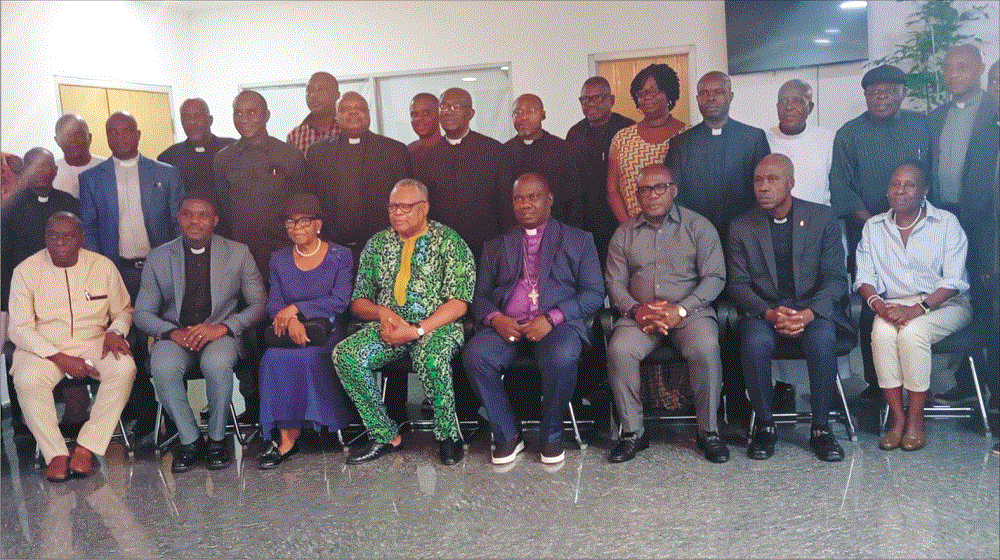
The 8th Synod of the Okrika Diocese, Church of Nigeria (Anglican Communion), holds from April 30 to May 3, 2026, at Bethel Anglican Church, Amadi-Ama, Port Harcourt. Bishop Enoch Atuboyedia dropped the hint while briefing newsmen in Port Harcourt.
Bishop Atuboyedia described the synod as a critical period for spiritual reflection, evaluation, and strategic planning for the growth of the church. He noted that it is a time when the church, under the guidance of the Holy Spirit, takes key decisions to advance God’s kingdom.
According to the Bishop, this year’s synod will feature activities such as scriptural meditation, Bible study sessions, seminars, and the presentation of the Bishop’s Charge and Presidential Address.
He added that there will also be the launching of a diocesan secretariat fund, with proceeds aimed at supporting the ongoing construction of the diocesan secretariat complex.
He further disclosed that the synod will emphasize spiritual renewal, with expectations of a Pentecost-like experience, drawing reference to Acts Chapter 2. The event will conclude with a thanksgiving service.
Reflecting on developments within the diocese since his enthronement on April 28 as the second Bishop of Okrika Diocese, Atuboyedia said the church has maintained a strong focus on evangelism. He highlighted the establishment of youth-focused churches and non-liturgical worship centres aimed at encouraging young people who had left the Anglican faith to return.
According to him, the initiative has already begun to yield positive results, with new members joining the church.
The Bishop also noted significant progress in the diocese’s various ministries. He said the women’s ministry has gained renewed momentum, citing the “Wakirikese Wailing Women” programme held at the market square, where women gathered for prayers and fasting for the land. The programme, he said, recorded wide participation, including women across different denominations.
On empowerment initiatives, Atuboyedia revealed that over 100 persons benefitted from the church’s empowerment programmes in the past year, including 70 individuals who received financial support of ₦100,000 each to boost their businesses.
He added that the diocese has also sponsored the education of 15 students in tertiary institutions, with plans to increase the number to 20 this year.
Providing updates on infrastructure development, the Bishop stated that the printing press and chapel wings of the diocesan secretariat have been completed and are awaiting dedication, while work continues on the main complex and hall.
He emphasized that all funds raised during the synod will be directed towards the completion of the secretariat project.
Bishop Atuboyedia called on government officials, heads of parastatals, traditional rulers, captains of industry, stakeholders, and the general public to attend and support the synod, describing it as an opportunity to contribute to the growth of the church and give thanks to God.
Politicians have been urged to adhere strictly to electoral laws and uphold sincerity, righteousness, and the fear of God as the 2027 general elections approach.
Bishop Atuboyedia stressed that politics must be driven by service, justice, and good governance rather than selfish ambition.
He cautioned political actors against turning public office into a personal empire, insisting that leadership is a call to serve the people.
He also warned against the growing trend of politicians using the church as a political platform, emphasizing that the church is a sacred institution that must not be reduced to a partisan arena for political manipulation.
While reiterating that the church does not endorse candidates or political parties, the Bishop noted that it has a moral responsibility to speak truth to power, promote accountability, and challenge leaders to govern with integrity and responsibility.
He lamented a political culture where personal interests often override truth, making it difficult for the church to provide direct political guidance.
According to him, governance cannot be separated from divine principles, as leadership and administration are gifts of the Holy Spirit that must be exercised with fear of God and a sense of duty.
The Bishop further recalled efforts by the Diocese to engage political leaders through dialogue and accountability meetings but expressed concern that many elected officials have been reluctant to subject themselves to scrutiny. Despite these challenges, Atuboyedia reaffirmed the church’s commitment to advocating for righteous leadership and godly governance, expressing optimism that Nigeria’s political system can improve with time and collective responsibility.