
By Ken Asinobi
Rivers State Governor, Sir Siminalayi Fubara, has urged members of the Opobo royal family to focus on building their own legacies rather than relying on inheritance, following the passing of the Amanyanabo of Opobo Kingdom, King Dandison Douglas Jaja.
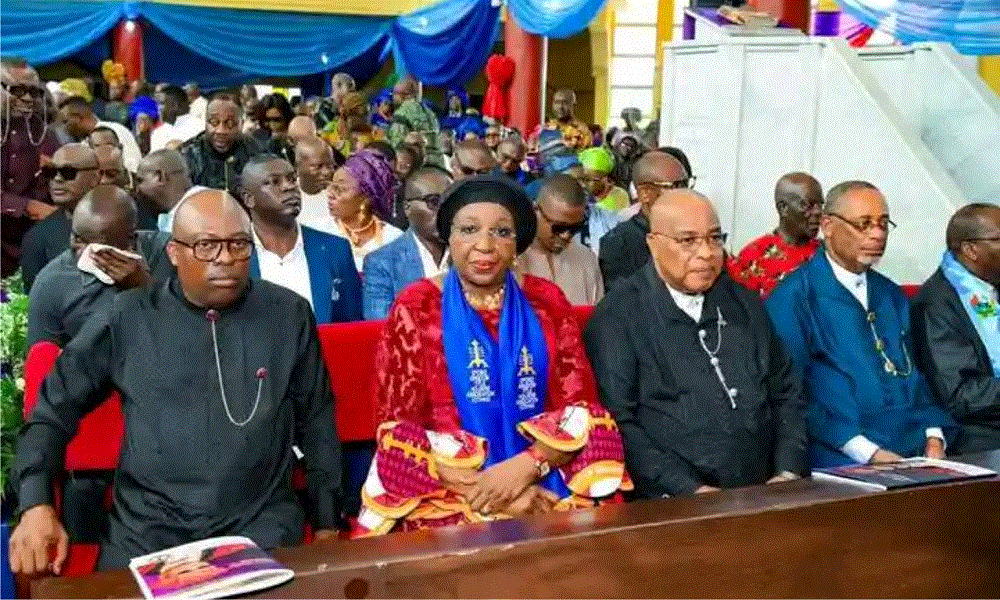
Speaking during the burial ceremony in Opobo Town on Saturday, the governor emphasized that while material assets can be passed down, true success must be earned individually.
He called on the family to uphold unity and avoid disputes over the late monarch’s property, noting that such conflicts could undermine the peace the kingdom has long enjoyed.
Fubara described the late king as a man of class, integrity, and remarkable composure, whose reign was defined by stability even during periods of contention.
He noted that under the monarch’s leadership, Opobo Kingdom recorded significant milestones, including producing both a deputy governor and a governor, adding that his life and achievements should be properly documented for future generations.
The governor further urged the people of Opobo to celebrate the life of the late monarch rather than mourn excessively, stressing that death is an inevitable part of life.
According to him, the king lived a fulfilled life and left behind a legacy of peace and dignity worthy of emulation.
Earlier in his sermon, the Anglican Bishop of the Niger Delta Diocese, Rt. Rev. Dr. Emmanuel Okwuchi Oko-Jaja, cautioned the royal family against engaging in disputes over the late king’s property.
He warned that material possessions are temporary and should not be allowed to create division among family members.
“We cannot kill ourselves because of the property of the late king,” the Bishop said, urging the queen, children, and extended family to prioritize peace and unity.
He reminded them that life is fleeting and that sustaining the legacy of the late monarch requires preserving harmony within the kingdom.
Also speaking, a chieftain of the Peoples Democratic Party (PDP) and member of the King Jaja Executive Authority, Dr. Sam Sam Jaja, described the burial as a solemn and culturally significant moment for the Opobo people.
He noted that the monarch’s reign, which spanned over two decades, made him one of the longest-serving rulers in the kingdom’s history.
He explained that in Opobo tradition, a king does not die but transitions to join his ancestors, adding that the burial rites were essential to affirming the spiritual continuity of the kingdom.
He highlighted the late king’s contributions to development, including improved access to the island, electrification, and educational support initiatives.
In the same vein, the Rivers State Commissioner for Commerce and Industry, Warisenibo Joe Johnson, described the burial rites as a symbol of unity, history, and continuity.
He commended the peaceful succession process, noting that it demonstrated maturity and cohesion within the royal institution.
Former Rivers State Commissioner for Information, Ibim Semenitari, also paid tribute to the late monarch, describing him as a custodian of culture and a promoter of unity.
She highlighted his role in institutionalizing the Opobo International Boat Regatta and preserving the kingdom’s heritage, while also praising his efforts in empowering women and promoting inclusivity.
Speakers at the event emphasized that the true test of the late king’s legacy lies in the ability of his people to sustain the peace and unity he championed.
They called on the younger generation to embrace values of discipline, service, and communal harmony as a way of honoring his memory.
As the final rites concluded, dignitaries from across the country gathered to pay their last respects, reflecting the wide influence of the late monarch. Among them were the Rivers State Deputy Governor, Ngozi Odu; former deputy governors, Gabriel Toby and Tele Ikuru; members of the National Assembly; Dumo Lulu-Briggs; representatives of the Imo State governor and the Head of Service of the Federation; as well as chiefs and delegations from Kalabari Kingdom, Andoni, and Amaigbo, among others.