
By Jerry Needam
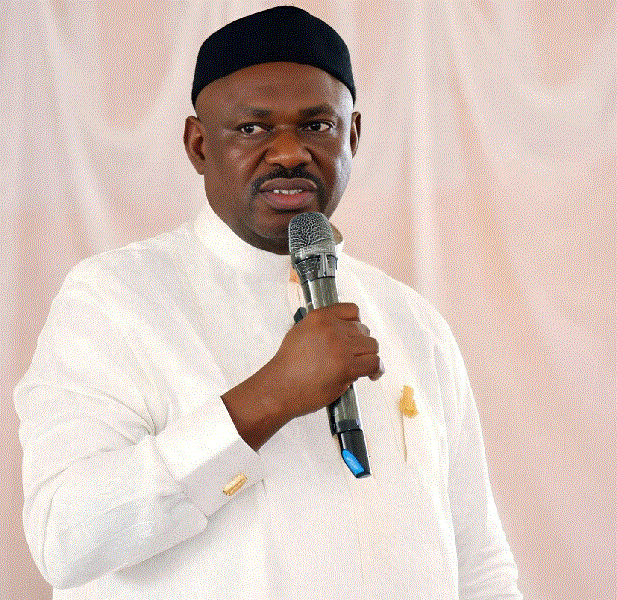
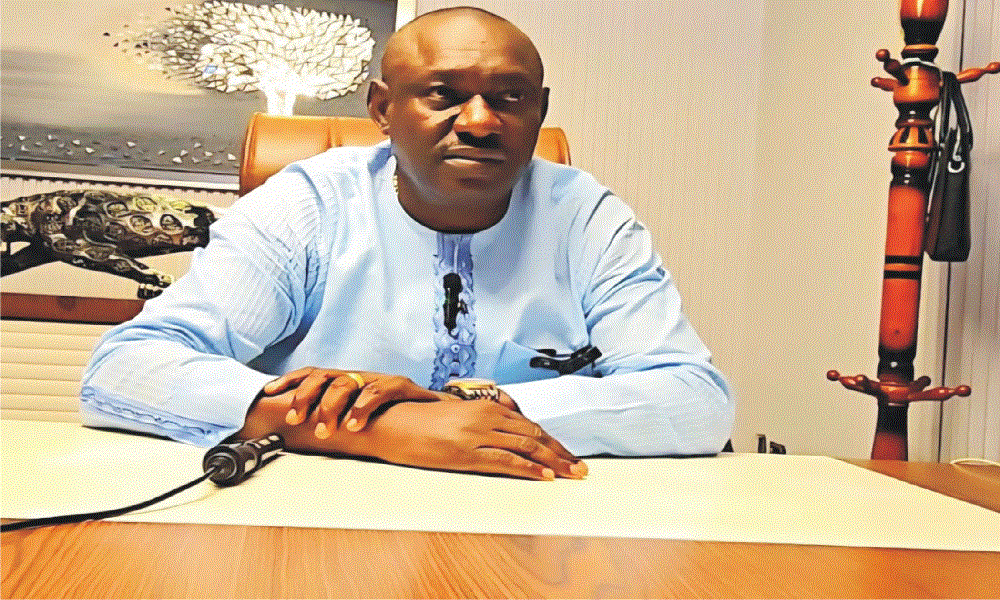
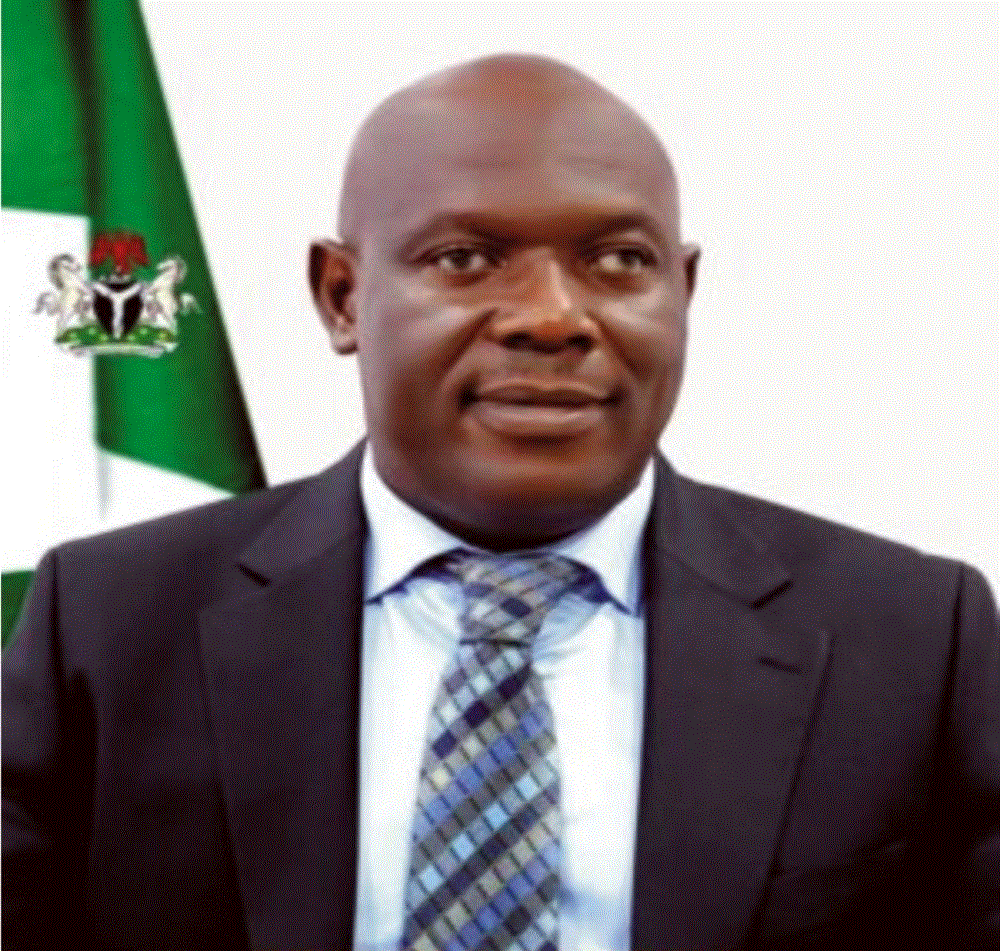
Ten years after the Federal Government flagged off the Ogoni Cleanup Project at the Bodo waterfront on June 2, 2016, the Hydrocarbon Pollution Remediation Project (HYPREP) stands today as one of Nigeria’s most ambitious and impactful environmental restoration initiatives. At the heart of this remarkable transformation is the visionary leadership of Professor Nenibarini Zabbey, whose stewardship has accelerated the pace of implementation and repositioned HYPREP as a model for environmental remediation, community engagement, and sustainable development.
When the United Nations Environment Programme (UNEP) submitted its landmark report on Ogoniland in 2011, many doubted whether the extensive environmental devastation caused by decades of oil pollution could ever be reversed. The challenges were enormous, the expectations high, and the stakes even higher.
However, under Professor Zabbey’s leadership, HYPREP has moved beyond promises to measurable results, delivering projects that are positively changing lives across Ogoniland.
Today, the project has successfully completed the remediation of 30 out of the 65 polluted sites identified by UNEP, while work continues on several medium-risk and high-risk sites. More significantly, HYPREP is currently leading what has been described as the world’s largest restoration of oil-degraded mangroves.
With over 1.5 million mangrove seedlings planted and more than 560 hectares restored, the once-devastated shoreline ecosystems are gradually returning to life. Biodiversity is re-emerging, fisheries are recovering, and communities that depend on the environment for survival are beginning to reap the benefits of restoration.
Beyond environmental remediation, Professor Zabbey has championed a people-centred approach that places the welfare of Ogoni communities at the core of the cleanup process.
One of the most celebrated achievements of the administration is the expansion of potable water supply across Ogoniland. Through the construction of water schemes, booster stations, and wind-powered water facilities, 49 communities have been connected to safe drinking water systems, bringing relief to thousands of residents who previously depended on contaminated sources.
The healthcare sector has also witnessed remarkable intervention. The near completion of the Ogoni Specialist Hospital and a 43-bed cottage hospital, alongside the upgrading and renovation of existing health facilities, reflects HYPREP’s commitment to addressing the public health consequences of environmental pollution.
The donation of ambulances, periodic medical outreaches, and the commencement of a comprehensive human health biomonitoring programme in partnership with the World Health Organization’s International Agency for Research on Cancer further demonstrate a holistic approach to community well-being.
Perhaps the most visible impact of Professor Zabbey’s administration is in the area of human capacity development and economic empowerment.
Thousands of Ogoni youths and women have benefited from specialized vocational training programmes in fields ranging from creative arts and mechatronics to cybersecurity, software development, commercial diving, underwater welding, maritime operations, and data analytics.
More than 7,000 direct jobs have been created, while over 5,000 beneficiaries have received practical skills training and start-up support designed to make them self-reliant and economically productive.
The educational sector has equally benefited from strategic interventions.
Scholarships and educational support grants have been awarded to over 1,000 undergraduate and postgraduate students, while environmental clubs have been established in secondary schools to cultivate a new generation of environmental stewards.
The establishment of the Centre of Excellence for Environmental Restoration (CEER), now nearing completion, is expected to become a leading research institution in environmental restoration and remediation in Africa.
Under Professor Zabbey’s watch, HYPREP has also strengthened peacebuilding and social cohesion in Ogoniland. Through community engagement programmes, youth empowerment initiatives, security partnerships, and conflict resolution mechanisms, the project has fostered greater community ownership of the cleanup process.
This inclusive governance model has significantly reduced tensions and enhanced stakeholder confidence in the project’s objectives.
One of the landmark achievements recorded during this period is the international recognition of the Ogoni Wetland as a Ramsar Site of global importance.
The designation underscores the ecological significance of the area and validates ongoing efforts to conserve and restore its rich biodiversity.
For many observers, the success of HYPREP under Professor Nenibarini Zabbey lies not merely in the statistics but in the visible transformation taking place across Ogoniland. Polluted sites are being restored.
Communities are gaining access to clean water.
Hospitals are emerging. Young people are acquiring employable skills.
Wetlands are being protected. Hope is returning to communities that once felt abandoned.
As HYPREP marks a decade of the Ogoni Cleanup Project, the achievements recorded so far provide compelling evidence that environmental restoration, when driven by visionary leadership, stakeholder collaboration, and community ownership, can deliver tangible and lasting results.
For Professor Nenibarini Zabbey, the tenth anniversary of the Ogoni Cleanup is not merely a celebration of projects completed; it is a testament to the power of commitment, innovation, and purposeful leadership in transforming one of the world’s most challenging environmental crises into a story of hope, renewal, and sustainable development.
Indeed, HYPREP at 10 is a success story, and Professor Nenibarini Zabbey remains one of its most defining architects.