

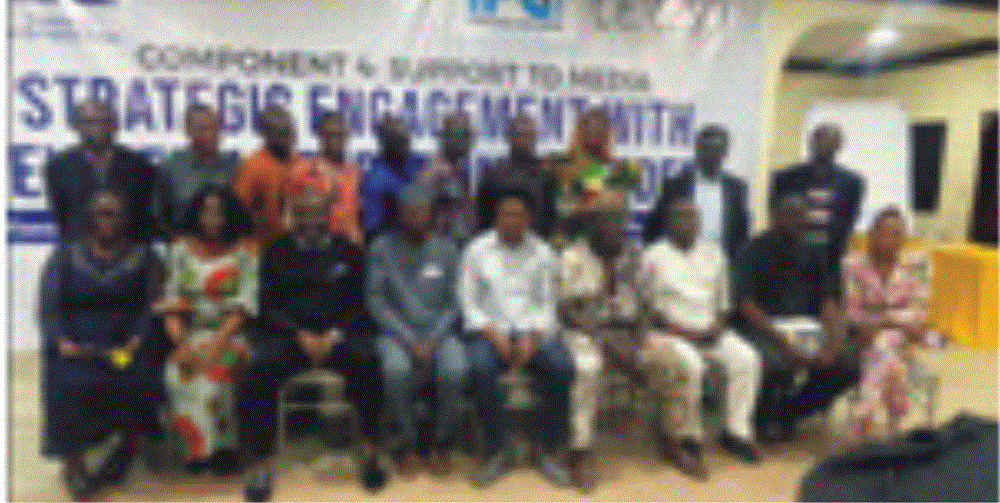
Media leaders and senior journalists in Rivers State have converged with the aim to strengthen the role of the media in consolidating democracy, particularly through impactful and ethical electoral coverage.
The event which took place at the Golden Tulip Hotel, Stadium Road on Tuesday, July 1, 2025, was jointly organized by the International Press Centre (IPC) and the Centre for Media and Society (CEMESO), and brought together editors, program managers, and operational leaders to chart a new course for media professionalism and inclusivity in the country’s democratic process.
Welcoming participants, the Executive Director of IPC Mr. Lanre Arogundade emphasized the critical leadership roles media executives play in shaping public understanding and ensuring credible elections.
He outlined four universally recognized roles of the media during elections: civic and voter education, public education, providing campaign platforms, and conflict management.
“Citizens consume and interpret media information to make informed decisions. The conduct or misconduct of media institutions impacts heavily on democratic processes,” Arogundade stated, highlighting the need for ethical, fair, and inclusive reporting.
Dr. Akin Akingbulu, Executive Director of CEMESO, echoed these sentiments, describing the media’s mission as “non-negotiable” in safeguarding democracy.
He acknowledged the significant strides made under Component 4 of the EU-SDGN II Programme, which has empowered newsrooms nationwide with anti-disinformation tools, digital storytelling frameworks, and inclusive narrative strategies.
However, Dr. Akingbulu noted persistent challenges, including financial instability, threats to press freedom, and the marginalization of women, youths, and persons with disabilities in media content and leadership.
Both leaders called for a “content revolution” and institutional reforms, urging media houses to mainstream marginalized voices, establish robust fact-checking mechanisms, and modernize editorial policies.
The convening concluded with a strong appeal for newsroom leaders to operationalize the skills and ethical standards acquired through recent capacity-building initiatives.
“We’ve equipped your teams; now we need you to unleash their potential,” Dr. Akingbulu charged, as participants resolved to renew their commitment to journalism that serves the public interest and strengthens Nigeria’s democracy.
In his perspective of the event, the facilitator and Executive Director of the De Gratia Centre for Media Rights and Education, Pastor Paulinus Nsirim, emphasized the critical role that media leaders play in shaping a transparent democratic landscape in Nigeria.
He highlighted that the Strategic Engagement with Key Media Operational Leaders was not merely a meeting but a significant step towards addressing the systemic challenges within the media sector.
The discussions, facilitated by the International Press Centre and the Centre for Media and Society, aimed to foster a collaborative environment where media leaders could reflect on their editorial responsibilities in promoting inclusivity and accountability, especially as the country approaches the 2027 elections.
Participants voiced their concerns regarding the myriad obstacles hindering effective journalism, such as the lack of standardized editorial policies and the pressures of commercial interests that compromise journalistic integrity.
Pastor Nsirim noted that the identification of these challenges was crucial for creating actionable strategies that align editorial priorities with democratic values.
He stressed the importance of a united front within the media community to combat issues like censorship, financial constraints, and the adverse effects of social media on traditional journalism.
The engagement served as a platform for media leaders to co-create solutions aimed at enhancing the relevance and impact of journalism in Nigeria’s democratic processes.
Pastor Nsirim concluded by expressing optimism about the future of Nigerian journalism. The proposed recommendations, including the establishment of dedicated desks for underrepresented groups and the promotion of ethical reporting practices, reflect a commitment to fostering a media environment that prioritizes inclusivity and accountability.
He encouraged continued collaboration among media leaders, civil society, and governmental bodies to ensure that the voices of all Nigerians are heard, particularly those of women and persons with disabilities. This commitment, he asserted, is essential for building a resilient media sector capable of contributing meaningfully to Nigeria’s democratic development and ensuring that the upcoming elections are conducted transparently and fairly.


