

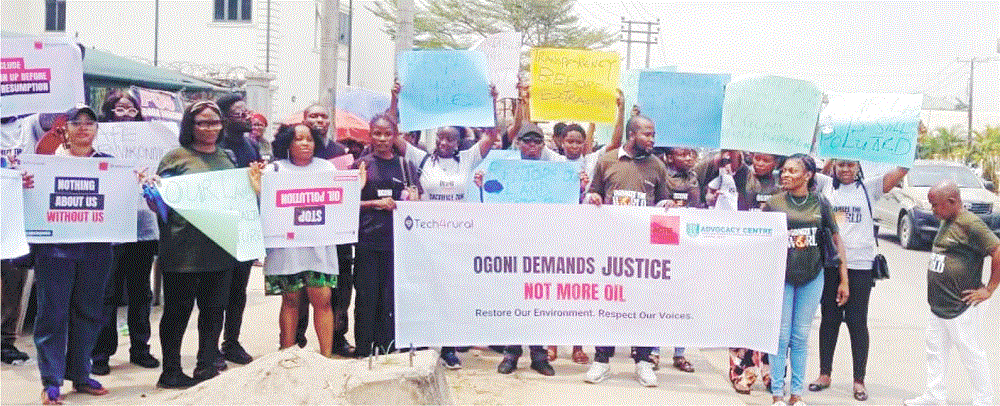
Civil Society Organisations (CSOs) have called on the federal government to fully implement the demands contained in the Ogoni Bill of Rights before resuming oil production in Ogoniland.
The groups also urged the holistic execution of recommendations from the United Nations Environmental Programme (UNEP) report and the quashing of murder charges against late rights activist Ken Saro-Wiwa and others.
The demands were made during a one-day community-led workshop and solidarity peace walk tagged “Project Ogonize,” organised by Tech4Rural in collaboration with the Youths and Environmental Advocacy Centre (YEAC-NIGERIA) in Port Harcourt. Participants carried placards with inscriptions including “Restore Ogoni first before oil resumption,” “Stop oil Pollution,” “Pollution is not Development,” and “No consent, no Oil,” reflecting widespread community concerns over environmental and human rights issues.
Dr. Fyneface Dumnamene, Executive Director of YEAC-NIGERIA, emphasised that resumption of oil activities without addressing environmental degradation and human rights abuses would deepen the wounds of the Ogoni people.
“The Ogoni Bill of Rights, presented to the federal government in 1990, contained demands on Shell and the Nigerian government to restore the environment and secure justice for affected communities.
It is imperative these issues are resolved first before oil production resumes in the area,” he stated.
The CSOs further insisted that any oil production resumption must respect the “Miideekor” demand of the Ogoni people, ensuring they have a stake, participation, and ownership in any company commissioned to operate in Ogoniland.
This, they said, is critical to empowering the local communities economically and giving them a voice in decisions that directly affect their land.
Jethro Christopher, founder of Tech4Rural, explained that Project Ogonize was designed to amplify advocacy for environmental justice using both physical and digital platforms.
Christopher, reflecting on his upbringing in Bayelsa State, highlighted the long-term effects of oil pollution on community livelihoods, noting that while oil companies often provide roads or electricity, the environmental costs — including degraded farmlands and polluted waterways—outweigh such benefits.
Evelyn Williams, Executive Director of Lighthope Succour Worldwide Initiative, shared firsthand experiences from Goi community.
She described women crossing waist-deep rivers contaminated with oil to reach their farms and observed the disappearance of fish stocks affecting local fishermen.
“The health implications are severe. We noticed that some residents, especially women, were exposed to oil-polluted water, which could have long-term impacts including cancer,” she said.
Williams added that advocacy efforts had already led to partial cleanups in some areas, demonstrating the effectiveness of sustained community activism.
The CSOs also highlighted the unresolved case of the Ken Saro-Wiwa Memorial Bus, which was seized by the federal government.
They argued that releasing the bus and other symbolic actions of justice would demonstrate genuine commitment to the Ogoni people and reinforce confidence in governmental and corporate initiatives.
Participants at the peace walk included youths, women groups, and local community leaders who collectively stressed the need for environmental remediation, justice for past abuses, and meaningful inclusion of Ogoni communities in future oil projects.
The exercise aimed to send a clear message to the federal government and multinational oil operators that economic activities cannot proceed without addressing historical and ongoing injustices.
Finally, the CSOs reaffirmed that holistic implementation of UNEP recommendations, respect for the Ogoni Bill of Rights, and protection of the environment must precede any plans for oil production resumption.
They warned that failure to do so could reignite tensions in the region and undermine sustainable development efforts in Ogoniland.